
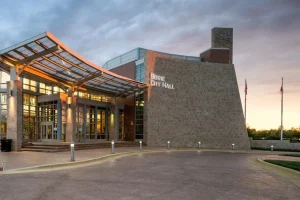
Bowie’s city government handles everyday services like police, trash, and parks for its 59,000 residents, all managed by a City Manager and a part-time City Council. They’ve got a budget of $70 million, mostly from property taxes, and the next city election is coming up this November.
Here are the highlights:
- The article provides an overview of the City of Bowie’s structure and services.
- U.S. government consists of four layers: federal, state, county, and municipal.
- Counties manage local services like police, road maintenance, and schools.
- Municipalities in Maryland have limited authority over land use and focus on public safety and community services.
- Bowie serves 59,000 residents with a budget of $70 million, primarily funded by property taxes.
- The City Manager oversees daily operations, while the City Council sets policies and budgets.
- The Mayor and City Council are part-time officials elected every four years.
- Bowie’s government includes seven departments: Community Services, Public Works, Police, City Manager’s Office, Information Technology, Finance, and Planning & Sustainability.
- City committees allow residents to engage in public programs and advise the City Council.
Stay informed
Sign up for my newsletter and join more than 3,500 of your Bowie neighbors getting regular updates directly from Mayor Mike.
How City Government Works
This article is intended to give an overview of the City of Bowie's structure and services. Detailed information on the city's programs, staff, and budget can be found here.
Introduction
In the U.S., there are usually four layers of government: federal, state, county, and municipal.
The federal government funds and oversees national programs like Social Security, Medicare, and U.S. armed forces. State governments fund and administer education, unemployment, and much of the country's road, rail, and bridge infrastructure.
Counties and cities are responsible for the more day-to-day services, namely police, local road maintenance, trash and recycling, land use, and park and recreation services.
In Maryland, county governments control zoning, the rules dictating how land can be used. Counties are also responsible for local schools with policymaking directed by county Boards of Education and funding mostly raised and directed by County Councils. Counties also provide day-to-day police and public works services to neighborhoods not incorporated into municipalites.
Municipalities in Maryland have some say in land use, mostly through development reviews and recommendations. Local government's main responsibility is public safety, public works, and community services.
Bowie Overview
The City of Bowie, like most area municipalities, provides police, trash and recycling, parks, community centers, and recreation services. It also directly controls water and sewer services for the Levitt community, about a third of Bowie households.
Bowie's government, covering 59,000 residents, has roughly 400 city employees and an annual budget of $70 million. It's funded mostly through city property taxes. The current city tax rate is 40 cents for every 100 dollars of assessed property value.
The city also receives some shared revenue from state income taxes, hotel taxes, and special commercial taxes.
City Leadership
The city is run day-to-day by the City Manager, a full-time public servant hired by and answerable to the City Council. The Council, comprised of the Mayor and six Council Members, meet twice monthly and act as a board of directors, setting policy decisions, agreeing to an annual budget, and addressing constituent issues.
The Mayor and City Council are part-time. They are paid a monthly stipend which doubles as their public budget. They all retain day jobs and share one staff member, the City Clerk, to assist with their functions. The Mayor and Council Members are expected to participate in the city's twice monthly council meetings, attend city events, and address constituent issues.
The Mayor and two At-Large Council Members are elected citywide. Four District Council Members are elected in individual council districts, running north-south. City elections for the Mayor and Council take place in November every four years. The next city election is November, 2023. City Elections are non-partisan and involve no runoff, so whoever wins a plurality for any of the seats is elected.
The Mayor chairs the Council and is the symbolic head of the city. The Mayor sets agendas and runs Council meetings, but does not have day-to-day executive power. In some places, the city government is run directly by the mayor, called a Strong Mayor System. Bowie's is a City Manager-Council system. Most suburban communities have city manager-run governments.
The City Manager is assisted by an Assistant City Manager and runs the City Manager's Office. This team includes the City Clerk, Emergency Preparedness staff, the Grants Office, Human Resources, Economic Development, and the city's Communications shop. This office represents a wide range of functions closest to the City Council's policy priorities and changes the most depending on the City Council's objectives.
Working alongside the City Manager and answerable directly to the City Council is the City Attorney. This critical role is filled by a contract lawyer with expertise in municipal government. They represent the city in all legal matters, meet regularly with the City Council, and provide legal advice to the Council and city staff as needed.
City Departments and Services
Under the City Manager and Assistant City Manager are the heads of the city's seven departments, their deputies, and staff. City government is departmentalized into Community Services, Public Works, Police, the City Manager's Office, Information Technology, Finance, and Planning & Sustainability.
Community Services oversees Animal Control, Code Compliance, and the Youth and Family Services office. They also manage the city gymnasium, ice arena, museums and historic properties, city playhouse, senior center, and the city's many public parks, ballfields, and outdoor courts. This department also organizes the city's major special events. Their department covers the widest range of services and is the most customer-focused.
Public Works provides a mix of public-facing and discreet-but-essential services like trash and recycling pickup, leaf collection, local road, sidewalk, curb and gutter maintenance, street light repairs, and snow plowing and salting operations. They also manage the city's water and sewer system. Theirs is labor-intensive work and performed mostly with city-owned and maintained equipment.
The Police Department covers a large range of public safety services and are responsible for investigating non-felony crimes in the city. They collaborate with the county on felonies. They staff the city's 24/7 dispatch and non-emergency call center, manage the city's speed camera program, and conduct regular public outreach events with the city's Public Safety Committee. They manage the city's camera rebate program, Explorer's group, and Citizens Police Academy. They also participate in regular training events, CALEA accreditation programs, and publish crime reports.
Information Technology provides the system and network administration that supports the other departments, as well as digital, telecommunications, and other technical support as needed. They work with other departments to automate day-to-day processes and make city services more customer friendly and less labor intensive. They also work constantly to protect the city from ransomware and Denial of Service attacks against local infrastructure.
The Finance Department monitors and controls the flow of city revenues and expenditures, and is responsible for ensuring the city operates within its lawful budgetary constraints. They work with the City Manager and all departments to develop the city's annual budget, assemble regular financial reports, work with the city's Financial Advisory Committee to help communicate budget matters to the public, and administer the city's water and sewer finances.
The Planning and Sustainability Department manages the city's permitting and development review process. They work to protect the city's green spaces and wetlands, and provide administrative support to the city's many environmental initiatives. They also develop the city's trails, complete streets, placemaking, and development policies.
City Committees
In collaboration with the formal city government operation are the city's public boards and committees. These cover everything from economic development and public safety to arts and outreach. They are appointed by the City Council and intended to be accessible, open to the public, and volunteer-led with city staff guidance.
The committees give interested residents an opportunity to collaborate in public programs and advise the City Council on policy. City boards have quasi-judicial roles and formal authority in reviewing development or adjudicating disputes.
A full list of the city's boards and committees, vacancies, and duties can be found here.