The new Bowie City Council was just sworn in, and they’re facing some big challenges like budget issues and improving local services, while also trying to attract better shops and restaurants to the area. It’ll be interesting to see how they tackle these problems in their upcoming meetings!
Here are the highlights:
- The newly elected Bowie City Council was sworn in on Monday.
- Mayor Adams and Council Members Michael Estève, Dufour Woolfley, Roxy Ndebumadu, Dennis Brady, and Wanda Rogers are part of the new council.
- Dufour Woolfley was voted as Mayor Pro Tem.
- The council features a mix of youth and experience, with members having varying lengths of service.
- Challenges for the new council include high service costs, low tax rates, and long-delayed capital projects.
- Key issues include worker shortages in essential services and the need for property tax increases or service cuts.
- Residents are opposing new development while demanding more upscale retail options.
- The council’s first official meeting is scheduled for November 27 at City Hall.
Stay informed
Sign up for my newsletter and join more than 3,500 of your Bowie neighbors getting regular updates directly from Mayor Mike.
New Council Sworn In
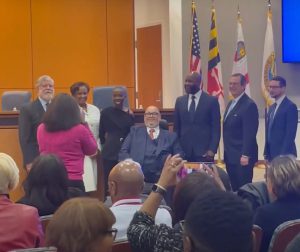
On Monday, the newly elected Bowie City Council was formally sworn in to office.
Mayor Adams and incumbent Council Members Michael Estève, Dufour Woolfley, and Roxy Ndebumadu were joined by newly elected At-Large Council Members Dennis Brady and Wanda Rogers.
Clinton Truesdale, who was appointed to his seat this summer, was formally elected to his post and sworn in Monday.
In remarks to the public, the Mayor and Council Members struck an upbeat tone, thanking family and residents, and pledging to work together.
Dufour Woolfley was unanimously voted by his colleagues as Mayor Pro Tem, the ceremonial second to the Mayor expected to stand in in the Mayor's absence.
The new council represents a diverse mix of youth and experience. Council Member Estève, at 33, has served eight years on the council, now one of its senior members.
Council Member Brady, after an eight year break, is returning to the council having previously served over 20 years on the body.
Ndebumadu, at 30, is returning for her second four-year term. Truesdale served six months following his appointment to a vacancy created when past Council Member Adrian Boafo was elected to the Maryland House of Delegates.
Woolfley is coming into his second consecutive full four-year term. He was appointed to an At-Large Council seat in 2015 and won a special election in 2018 for a competitive District 2 seat where he has since been twice re-elected.
Brand new is Wanda Rogers, a retired U.S. Treasury executive and Bowie Chamber of Commerce President. Rogers has been a fixture in Bowie politics, and is expected to be a sober consensus-maker.
Facing the new council is a litany of long-simmering challenges, starting with historically expensive services and a tax rate too low to sustain them.
In addition, major long-delayed capital projects are coming due, including long awaited improvements to the city's golf course, which has returned to profitability after a new management takeover last year.
The city's ice arena, well past its needed replacement, is also up for discussion. A past replacement arena on Church Road was canceled in 2020 mid-construction in favor of a smaller replacement arena adjacent to the Bowie Golf Course.
But the biggest issue will continue to be coping with longterm shortages in available workers in trash and recycling, police, water and sewer, and the continuing high cost of contract projects.
The Bowie Police Department, at 55 officers, continues to remain below the 65 for which it is slated, and well below the 122 officers a town Bowie's size would normally have available.
Paying for capital projects, managing higher starting salaries for worker recruitment and retention, and growing the city's public safety workforce will be expensive, requiring a series of property tax increases, or significant cuts to existing services.
And little help is expected from the state or county, both facing budget challenges of their own. Maryland's ample surpluses have in a single year turned into a projected half-billion dollar deficit.
Outside of budget challenges, the new council will invariably face property owners seeking to develop parcels in and around the city as the demand for housing continues to outpace supply.
Resident opposition to new growth has persisted with lawsuits and landslide elections at the city and county level favoring candidates pledging to combat development.
Residents have also increasingly demanded the city do more to attract upscale restaurants and retail, a focus of the council in recent years.
Hours of meetings and presentations from economic development professionals has yielded consistent advice: businesses follow customers, and in high-cost environments, are exceedingly careful about where they set up.
For more upscale shopping, the city has repeatedly been advised it will need to promote significant high-density development targeting high-income, younger residents willing to spend on restaurants and quality retail.
In addition, the city will need to be willing to consider aggressive tax subsidies for choice businesses, as neighboring communities have increasingly done in recent years.
Neither high density growth nor business tax subsidies have been popular with residents, creating a fine tightrope the new council will need to walk if it plans to improve local retail.
The first official meeting of the new city council is on Monday, November 27 at 8:00pm at City Hall. Council meetings are typically the first and third Mondays of the month at 8:00pm and are open to the public.
View a video recap of the swearing-in ceremony.