Maryland’s transportation budget is taking a hit, with an 8% cut that could slow down local road projects like the expansion of Route 197 and street resurfacing. With a $322 million budget gap looming, it looks like we’re in for some tough times ahead for infrastructure improvements.
Here are the highlights:
- Maryland Department of Transportation faces budget cuts due to growing deficits.
- Governor Wes Moore announced an 8% cut to all transportation agencies, raising concerns about local road projects.
- Significant implications for transportation priorities, including delays in road expansions and resurfacing subsidies.
- Budget analysts predict a $322 million gap in the upcoming legislative session and $2 billion by fiscal year 2029.
- Increased education spending and declining gas tax revenue exacerbate the budget issues.
- The transportation fund is struggling due to aging infrastructure and the rise of fuel-efficient and electric vehicles.
- Maryland’s six-year Consolidated Transportation Plan is unbalanced, showing a $100 million shortfall in the first year.
- The shortfall complicates major projects like the Red Line, Capital Beltway widening, and American Legion Bridge replacement.
- Local officials suggest a focus on smaller, attainable projects rather than large-scale initiatives.
- The Maryland Purple Line project has significantly exceeded its budget and timeline.
- Calls for prioritizing local projects to improve walking and biking infrastructure.
- Maryland must navigate budget constraints while maintaining economic growth and essential infrastructure.
Stay informed
Sign up for my newsletter and join more than 3,500 of your Bowie neighbors getting regular updates directly from Mayor Mike.
Maryland Budget Cuts Threaten Local Road Projects
In the face of growing deficits, the Maryland Department of Transportation is bracing for budget cuts with potential local implications.
Governor Wes Moore announced this week an 8% across-the-board cut to all Department of Transportation agencies, triggering concern about the fate of area road projects.
The cuts will have significant implications for the state's transportation priorities, and will likely further delay area projects, notably the expansion of 197 and subsidies for local street resurfacing.
Governor Moore previously warned of difficult decisions in light of looming state deficits. Budget analysts anticipate a $322 million budget gap in the upcoming legislative session with deficits reaching $2 billion by fiscal year 2029.
The gaps are exacerbated by increased education spending mandated by the Blueprint for Maryland's Future, as well as strains on the state Transportation Trust Fund driven by aging infrastructure, inflation, and declining gas tax revenue.
The transportation fund has failed to keep pace with demand, complicated by the rise of fuel-efficient and electric vehicles, reducing income from fuel taxes. A state task force established this year is looking into alternative revenue sources for the ailing fund.
Transportation Secretary Paul Wiedefeld presented Maryland's six-year Consolidated Transportation Plan, which for the first time in its history was unbalanced.
The plan showed a shortfall of $100 million in its first year, escalating to $2.1 billion by the end of the current six-year outlook.
The gap especially complicates new projects, including the Red Line in Baltimore, the widening of the Capital Beltway, I-270, and the replacement of the American Legion Bridge.
The deficit will also likely cut into smaller state-funded projects including the long delayed widening of 197 in Bowie.
Some local transportation officials believe declining gas tax revenue is only part of the problem. One official believes a major culprit is the state's focus on large new projects at the expense of current infrastructure.
A member of the Metropolitan Council of Governments pointed to the ongoing Maryland Purple Line project intended to connect beltway Metro stations with a commuter lightrail. "The Purple Line was supposed to be finished by now and cost $4.5 billion. Instead, it's approaching $9 billion and is still years away from completion."
They believe the state could focus less on large scale projects and instead prioritize local projects improving walking and biking to reduce local car trips.
"Absent a major change in Maryland's approach to transportation, we're going to need to revise expectations and push for more attainable local projects," they said.
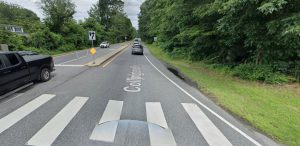
One such example could be the addition of a pedestrian crossing at Lerner Place meant to reduce speeds on 197 and improve walker and biker safety.
As Maryland grapples with its growing budget deficits, the state will face a delicate task of navigating constraints while maintaining economic growth and providing for essential infrastructure.