The City of Bowie just adopted a budget that spends big without raising taxes, which could lead to serious financial issues down the road. Despite warnings from finance staff, the City Council decided to fully fund services now and deal with the consequences later, leaving residents with tough choices ahead.
Here are the highlights:
- The City of Bowie is facing an unsustainable financial path due to rising public service costs and low taxes.
- City Finance staff warned that without a tax increase, reserves could dip below minimum levels, risking a downgrade in the city’s Aaa bond rating.
- The City Council initially supported a 5 cent tax increase to maintain service levels and fund capital projects.
- Despite warnings, the Mayor delayed the vote on the tax increase, leading to speculation about political motives.
- Ultimately, the City Council voted 6-1 to adopt a budget without a tax increase, despite staff warnings of future financial difficulties.
- The Mayor justified the decision by citing residents’ financial struggles and economic uncertainty, ignoring the long-term implications.
- The current budget is deemed unsustainable, risking the city’s financial health and leaving difficult choices for the future.
- Residents will need to choose between raising taxes to maintain services or cutting services to keep taxes flat.
Stay informed
Sign up for my newsletter and join more than 3,500 of your Bowie neighbors getting regular updates directly from Mayor Mike.
How the city adopted a budget that’s all spend now, tax later
There's a popular trend among politicians as old as politics itself: spend wildly, don't raise taxes, and hope you're not around when the money runs out.
The City of Bowie's Finance staff have warned for years that the city is on an unsustainable path, funding increasingly expensive public services, keeping taxes too low to cover costs, and eating deeper and deeper into its reserves to close shortfalls.
Increasingly hard-to-fill public works and public safety jobs, higher starting salaries, and skyrocketing costs of contracts, maintenance, and equipment have sent city expenses through the roof, well past the pace of new tax revenue from steadily climbing property values.
Resident consensus has remained firmly on the side of not cutting services. To keep services intact, the City Council relied more and more on the city’s reserve fund to plug shortfalls, opting to take advantage of past fiscally conservative policies rather than adopt gradual proposed 2 cent tax increases.*
Over time, small budget shortfalls grew into large budget shortfalls. This year, city Finance staff proposed not a 2 cent tax increase, but a 5 cent increase to prevent the city bringing its reserve fund to its minimum levels.**
Without the increase, or a reduction in services, Finance staff warned that city reserves could even dip below their minimum levels next year if tax revenue came in even somewhat smaller than projected. This, staff warned, could trigger a downgrade in the city's Aaa bond rating, resulting in higher future borrowing costs and setting the city on a financial spiral.
When the City Council gathered for its initial budget meeting in January, its instructions to city staff were unambiguous: don't cut any existing services, fully fund all programs, tackle previously delayed capital projects. Staff explained that the 5 cent tax increase would be needed to fund such a budget without jeopardizing the city’s longterm financial health. Council did not object, save for one member who indicated support for tax increases in future years, just not yet.
With a firm Council majority on the side of raising taxes and fully funding services, city staff went on to craft a budget that maintained service levels, tackled long delayed capital projects, and addressed the fast rising cost of labor, parts, and equipment, with the 5 cent tax increase to pay for it.
Over six following public meetings, Council Members not only reaffirmed their support for maintaining service levels and addressing capital needs, but found new items to add and fund sooner. The budget got bigger in Council's hands. Only nominal talk was given to revisiting certain assistant positions, less than $120,000 in a $77 million budget.
Two weeks before the city's final budget hearing, when the City Council normally adopts its tax rate, the Mayor surprised staff and most of Council by asking to delay the vote to raise taxes. There was no discussion as to why the delay, or direction to staff on how to prepare for the final budget vote two weeks later.
Councilmember Woolfley and I raised that even if a vote on the tax rate was put off, discussion was needed as to how to plan in the event the rate wasn't ultimately increased. Staff had spent months crafting a budget that depended on the higher tax rate. Without it, the city budget would be unsustainable, and a plan would be needed for how to course-correct. No debate occurred. The decision was simply put off.
Absent any clear rationale, there was speculation some Council Members were hoping for a majority to pass the fully funded budget with the tax increase, while leaving room for themselves to vote no. This is a common political tactic: fill budgets with popular programs you want credit for, then vote against raising the taxes to pay for them. Members of Congress have perfected this art.
Ahead of the city's budget deadline, sensing the Mayor and at least two other Council Members were going to oppose the tax rate increase, a majority of the City Council decided to also vote against raising taxes. No one councilmember wanted to be caught holding the tax-raising-hot-potato.
The day of the budget deadline, without a majority to support raising taxes and no time left to plan a new budget, city staff proposed keeping the entire budget intact, eating deeper into reserves to cover the costs. City staff warned, again, that the city would be in a severe position next year, needing an even larger tax rate increase, or deep cuts.
Staff further warned that in the event tax revenue came in even modestly lower than expected next year, the city would dip below its reserve minimums, with potentially serious consequences.
The night of the vote, the Mayor announced that taxes wouldn't be raised and that the city would fund every penny of public services without a tax increase. Despite having supported a historically large budget, and in spite of repeated warnings from city personnel that a tax increase or service cuts were necessary for the longterm fiscal health of the city, the Mayor stated he believe neither a tax increase nor spending cuts were necessary.
The Mayor explained his view that residents were hurting financially, that the country's economic prospects were uncertain, and that raising taxes would be bad for the local economy. He did not address how the city would deal with the unsustainable financial situation next year.
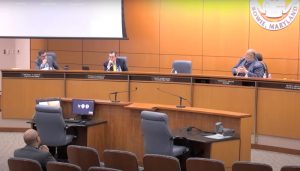
On a 6-1 vote, the City Council adopted the full budget with no cuts and without a tax rate increase. Staff warned a final time that next year's choices would be painful, and that Council's backs would be against the proverbial wall.
There has been rampant speculation as to the Mayor's thinking. If the Mayor didn't want to raise taxes, he could have asked city staff back in January to prepare a budget that kept tax rates flat. They would have had to have made difficult cuts, but they could have at least crafted a budget that put the city on better financial footing.
Instead, the Mayor let city personnel craft a large, unsustainable budget while leaving it to next year to figure out how to pay for it.
This is an election year, and elected leaders are no doubt going to hit the campaign trail boasting that city services are fully funded with no tax rate increase. But let there be no misunderstanding: the current city budget is unsustainable. The city is risking its Aaa bond rating and faces painful choices next year.
The Mayor and Councilmembers will now have the opportunity to go to residents with the choices they face. My hope is residents make clear their preference, either to raise taxes to maintain services, or cut services to continue to keep taxes flat. But that conversation can only happen if city leaders are honest with residents about the choices ahead.
—
*1 cent in property taxes represents roughly 40 dollars for the average Bowie household.
**The city maintains a policy of keeping 25% of its annual expenses in reserve. This policy helped the city navigate the 2008 recession without service disruptions and has been key to maintaining a Aaa bond rating.