
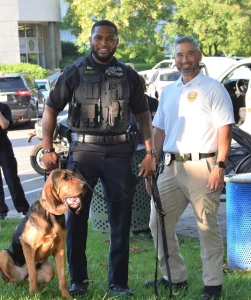
Bowie’s crime rates are rising, with an alarming increase in homicides and car thefts, while the police force is stretched thin and funding is dwindling. To keep up with these challenges, the city might have to raise taxes, despite the unpopularity of such a move.
Here are the highlights:
- Bowie has experienced its 8th homicide this year, raising concerns among residents.
- There is a spike in thefts from autos, prompting police to advise residents to lock their cars and remove valuables.
- Local police academy attendance is down, leading to staffing shortages in the Bowie police department.
- Bowie currently has 63 officers instead of the 65 needed, compared to an average of 130 for towns of its size.
- Response times are currently fast, but may not be sustainable without a slowdown in police calls.
- The city is using technology to enhance police coverage, but it may not be sufficient.
- Maintaining police presence will require increased spending on public safety and potentially raising taxes.
- The city has not raised its tax rate since the police department was established, leading to a dwindling cash reserve.
- Bowie’s AAA bond rating is at risk without financial adjustments.
- Tax increases may be necessary despite being unpopular, with considerations for exemptions for vulnerable residents.
- Local water and sewer systems are struggling with capital repairs, leading to additional costs for users.
- Federal aid is insufficient compared to long-term needs for infrastructure repairs.
- The cost of labor is rising, making it difficult for local governments to fill positions.
- Local governments face increasing costs and challenges in providing services, necessitating difficult conversations with residents.
Stay informed
Sign up for my newsletter and join more than 3,500 of your Bowie neighbors getting regular updates directly from Mayor Mike.
Sounding the Alarm on the Cost of Local Services
Bowie experienced its 8th homicide this year when a man was shot and killed in his vehicle on Gabriel Lane earlier this week. Homicides are investigated by county detectives and so far the incident does not appear random. That’s little comfort to residents in a city accustomed to an annual homicide rate of zero.
The city is also seeing a spike in thefts from autos. Police have been asking residents to consistently lock their car doors and remove valuables from their vehicles to make the city less of an easy target. But for the time being, the trend of car break-ins doesn’t appear to be slowing.
Worse, the national crime resurgence comes at a time when police are harder to come by–local police academy attendance is down significantly. Bowie is slated for 65 officers with 63 on duty at present. An average town of Bowie's size has roughly 130 officers. In conversations with patrol squads, they’re simply overwhelmed. Calls come in faster than can be answered and court time, paperwork, mandatory training, and sick leave are making the city’s already sparse law enforcement coverage even smaller.
For the moment, response times remain comparatively fast. But without a slowdown in police calls, current response rates won’t be sustainable. The city is leveraging technology, including a residential camera rebate program, officer drone training, and its public engagement IMPACT program to cover more ground with fewer personnel, but it may not be enough.
To put it candidly, maintaining the kind of police presence residents expect will mean spending substantially more on public safety, and raising taxes to do it.
When the police department was first created in 2006, it was understood a series of tax increases would be needed to fund the new department. The city applied and received tax differentials from the county–reductions in county taxes on city residents intended to allow the city to raise its rates to pay for services the county would otherwise provide. However, the city never ended up raising its tax rate, with the effect that city residents saw a significant expansion in services while enjoying tax cuts from the county.
Unfortunately, this was never a sustainable long term strategy, and the chickens are coming home to roost. The city’s once substantial 30 million dollar cash reserve is dwindling in the single digits. The city has received multiple warnings that its coveted AAA bond rating could be threatened without a course correction. While a tax increase would be the single most unpopular city policy in decades, it may simply be unavoidable, no matter who is at the helm in the next two years. Math doesn’t care about politics.
There may be strategies to help offset the burden of a tax increase on disproportionately impacted residents. The city will no doubt consider exemptions for seniors, homesteaders, and residents on fixed incomes. These, of course, add to the burden on remaining taxpayers, raising questions about fairness.
Sadly, new taxes to fund local law enforcement won’t be the only added cost in the near future. WSSC and the city water and sewer system are struggling to keep up with capital repairs. The city system is limited to residential ratepayers and isn’t likely to grow in the future, meaning every failed well, water main break, and nearly every cent of the estimated 130 million longterm dollar pipe replacement will come directly out of users’ pockets.
Federal lawmakers came through with roughly 2 million dollars in direct help from Uncle Sam, but this is a drop in the bucket compared to the longterm need. Additional money may be available through the state, but Bowie, not being especially poor, rarely qualifies for this sort of aid. While the city’s water recapitalization fee successfully helped the city replace two miles of pipe, it has another 88 miles to go, and water users understandably want to accelerate the pace of repairs.
Worsening the situation, the cost of labor is through the roof. At municipal conferences, mayors and city managers across the country are sweating a lack of available workers for everything from picking up garbage to managing water and sewer treatment facilities. Cities are increasingly having to poach talent from other towns, and in the relatively prosperous DC capital region, the competition is fierce. Neighboring Howard County offers sign-on bonuses at $20,000 for some vacancies. Many governments face raising taxes purely to afford staffing minimums. At the county level, decision makers have the unenviable task of filling record shortages in teaching, bus driver, and support positions.
In sum, the cost of doing business is getting substantially worse for local governments with no end in sight. Lawmakers at all levels are going to have to overcome their usual aversion to having difficult, honest conversations with residents to navigate the tough choices ahead.
Michael Estève is a lifelong Bowie resident and member of the Bowie City Council. His weekly newsletter can be joined by emailing mesteve@cityofbowie.org.